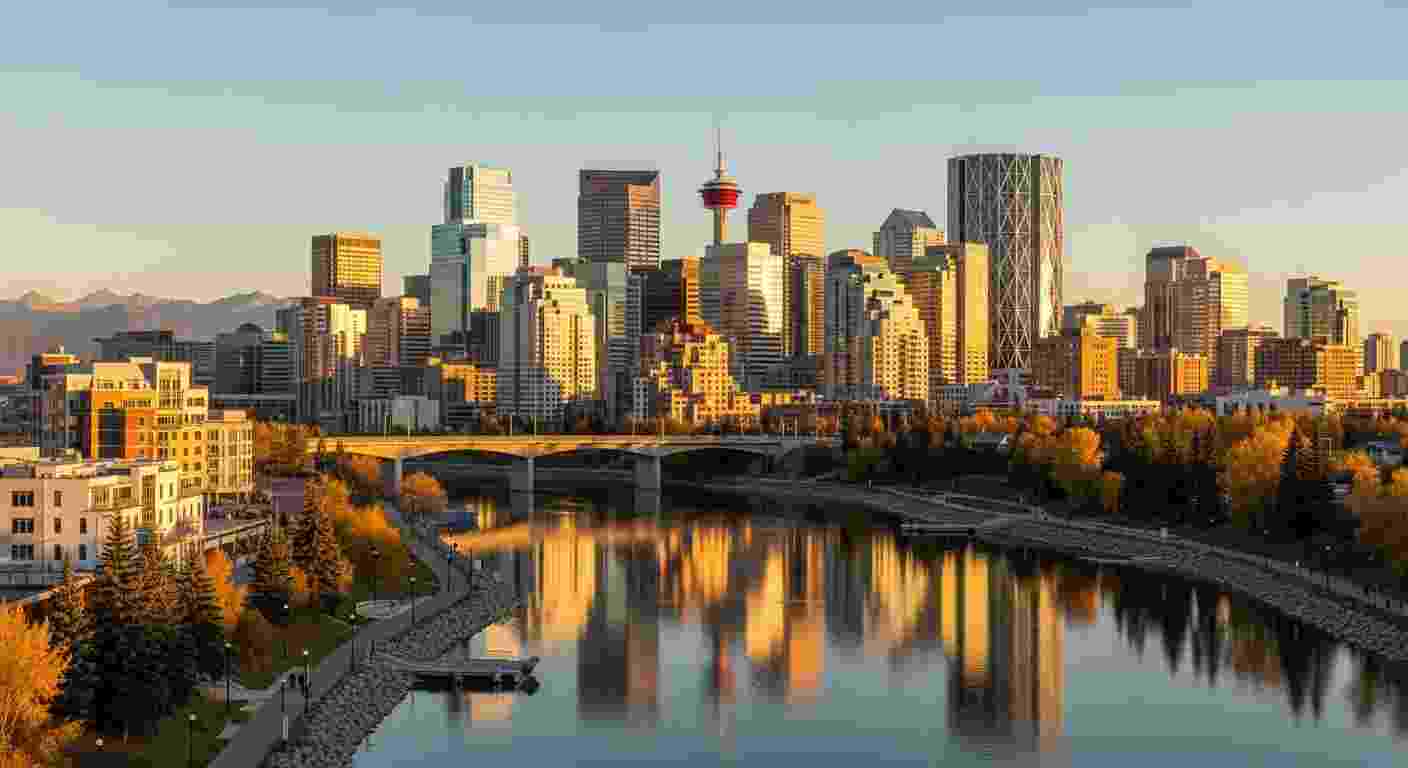
You go to sleep wearing thick flannel and wake up to water dripping from your eavestroughs. Stepping outside in the middle of January without a heavy parka feels almost surreal.
Calgarians know this bizarre winter magic intimately. We watch that long flat cloud bank form over the western horizon and instantly know what is coming.
The warmth is always a welcome break from the bitter cold but these sudden southern Alberta weather swings carry a complicated reputation.
For those who have lived here their whole lives, the arrival of that distinct cloud formation brings a mix of deep relief and mild dread.
The brilliant blue skies sitting above the dark band of clouds signal an immediate end to the freezing temperatures. Puddles form on the sidewalks and neighbors emerge from their homes blinking in the bright sunlight.
But along with the beautiful melting snow comes a wave of strange physical and environmental side effects that leave the entire city reeling.
The mountain magic behind the melt
If you have ever asked a newcomer what is a chinook, you will likely hear them describe it as a freak heatwave or a strange climate glitch. The actual science driving the phenomenon is far more fascinating.
Global News Calgary chief meteorologist Tiffany Lizee explains that it all begins over the Pacific Ocean. Moist air travels eastward and crashes directly into the towering peaks of the Rocky Mountains.
As this air is forced upward, it dumps its moisture as rain or snow on the British Columbia side. By the time that same air mass crests the peaks and rolls down toward our city, it has completely transformed into something entirely different.
The descending air warms rapidly through a process of pressure and compression. The result is a blast of warm and intensely dry air sweeping across the foothills.
This is the exact atmospheric mechanism responsible for our infamous Calgary winter weather anomalies.
Lizee notes meteorologists can sometimes see these strong low pressure systems building up to ten days in advance. These legendary snow eaters can melt away weeks of heavy winter accumulation in a matter of hours.
When the dry winds hit the remaining snowpack, the moisture simply vanishes into the air.
Why your head is pounding
The sudden arrival of spring temperatures in February sounds absolutely perfect until the piercing pain behind your eyes begins.
If you suffer from sudden pain when the weather shifts, you are far from alone in your misery. Migraine Canada reports that a massive eighty percent of Albertans associate their migraines with these warm winds.
Even though only twenty percent of those people show reliable clinical sensitivity, the collective pain felt across the city is undeniably real. Finding true chinook headache relief has become a casual obsession for locals.
University of Calgary pediatric neurologist Dr. Serena Orr points to extreme shifts in barometric pressure as the primary suspect for this widespread pain.
Calgary sits at an elevation of more than one thousand and forty metres above sea level, making it the highest major city in the country.
The dramatic drop in atmospheric pressure that accompanies Calgary chinook winds acts like a physical weight lifting off the entire environment.
For many sensitive residents, that rapid pressure shift translates directly into debilitating neurological pain.
Edwin Cey heads the earth energy and environment department at the University of Calgary, and he understands the struggle perfectly.
He uses incoming weather events to track his own migraine triggers just like countless other residents.
While medical experts are still conducting studies to understand the exact biological mechanisms behind the pain, locals already know the drill.
When the western sky begins to change shape, pharmacies across the city prepare for a rush on pain relievers.
The ripple effect on our city
The extreme temperature changes do much more than mess with our heads and ruin our winter wardrobes.
Mount Royal University professor Susan Reid points out that our local ecosystems get thoroughly confused by the false spring.
Trees and plants sometimes begin budding early during a prolonged warm stretch, thinking winter has finally ended.
When the inevitable deep freeze returns to the prairies, those new buds are left entirely vulnerable to severe frost damage.
The city road maintenance budget feels the whiplash just as much as our gardens do.
Those roaring winds might help clear the roads naturally, saving money on snow plows, but they also create a nightmare of melting and refreezing.
Black ice becomes a massive hazard for commuters and pedestrians trying to navigate the slippery sidewalks.
Attempting to plan street clearing efforts with a fifty five million dollar budget becomes incredibly difficult when the snow is here today and gone tomorrow.
Further west into the Rockies, the rapidly shifting temperatures create hidden dangers for winter enthusiasts.
Avalanche Canada warns that the strong winds create stiff layers of snow known as wind slabs. These fragile layers severely increase the risk of avalanches for backcountry skiers and hikers, making the beautiful weather deceptively dangerous.
A complicated local love affair
We might complain endlessly about the slushy sidewalks and the sudden need for pain medication, but nobody truly wants the warm winds to disappear.
They break up the brutal cold snaps and give us a vital taste of spring when we need it the absolute most.
Other parts of the world experience this same mountain effect, from the Zonda in Argentina to the Northwesters in New Zealand.
Yet somehow the arch feels like a distinctly local treasure that belongs entirely to us.
These wild weather swings are simply part of the price we pay for living next to the most beautiful mountain range in the world.
We will gladly take the throbbing headaches and the messy puddles just to feel the sun warming our faces in the dead of winter.
When the next deep freeze inevitably rolls into town, we will all be looking west waiting for that familiar dark cloud band to return and save us once again.